|
Engineering and Project Development Services
|
Graz
Cycle
www.GrazCycle.com
Graz Cycle - the Zero Emission Power Plant!
What is the Graz
Cycle?
The Graz Cycle is the only thermodynamic combustion cycle that allows for the retention and capture of carbon dioxide emissions from the "clean combustion" of fossil fuels. The Graz Cycle is the thermodynamic cycle that provides for a "zero emission power plant" which also has the highest available efficiencies using gas turbines. The Graz Cycle has also been heralded as the "zero emission" power plant.
The Graz Cycle's clean combustion process includes pure oxygen with the fossil fuel thereby enabling for the cost-effective separation of the carbon dioxide emissions from the combustion process through condensation. The additional expense for supplying the oxygen for the clean combustion process - and requirements for an air separation unit, are compensated, in part, through the increase in cycle efficiencies that exceed 65%. The combined efficiency of the Graz Cycle equals or exceeds the thermodynamic performance of other serious Carbon Capture and Sequestration (CCS) technologies.
In practice, net electrical cycle efficiencies for Graz Cycle power plants have exceeded 65% - which is significantly greater than typical of state-of-the-art combined cycle plants. Greater efficiency means more power for less fuel which means fewer emissions.
According to the DOE web site, the Graz Cycle consists of a high temperature Brayton cycle and a low temperature Rankine cycle with a Heat Recovery Steam Generator or "HRSG." The Graz Cycle is an oxy-fuel power cycle with the capability of retaining all of the carbon dioxide emissions from the combustion process for further use. Its cycle configuration aims at highest efficiency by reducing the heat extraction in the condenser to a minimum. A thermodynamic investigation of the Graz Cycle fired with natural gas (CH4) shows a net efficiency of 52.5%, if the efforts for oxygen supply and CO2 compression to liquefaction are considered. If synthesis gas can be used from an external synthesis gas plant at 500°C, efficiencies can rise up to 56%. Studies indicate that further efficiency improvements and simplification of the cycle are possible.
_______________________________________________________
Clean Power Generation Solutions
Our "Integrated" CHP
Systems (Cogeneration
and Trigeneration)
Plants
Have Very High Efficiencies, Low Fuel Costs & Low Emissions
The Effective Heat Rate is Approximately
4100 btu/kW & System Efficiency is 92% Plant.
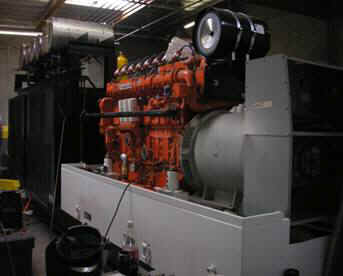
The CHP System
below is Rated at 900 kW and Features:
(2) Natural Gas Engines @ 450 kW each on one Skid with Optional
Selective Catalytic Reduction system that removes Nitrogen
Oxides to "non-detect."
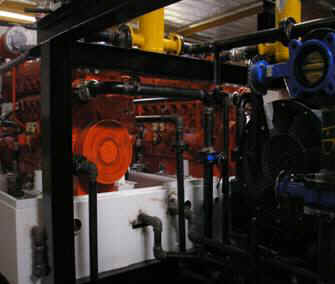
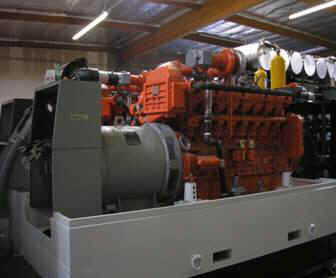

Our CHP Systems may be the best solution for your company's economic and environmental sustainability as we "upgrade" natural gas to clean power with our clean power generation solutions.
Our Emissions
Abatement solutions reduce Nitrogen
Oxides to "non-detect" which means our Trigeneration
energy systems can be installed and
operated in most EPA non-attainment regions!
_______________________________________________________
______________________________________________________
About us:
We provide engineering and renewable energy project development services including;
Economic Feasibility Analysis
Feasibility Studies
Front End Engineering Design - FEED
Greenhouse Gas Emissions consulting
Interconnection Studies
Project Development
Project Management
Project Finance/Funding introduction to potential investors
Power Purchase Agreement consulting & PPA funding
Our work is
performed on a strict adherence to "vendor-neutrality." We are
client and project focused and seek to maximize our client's return on their investment
while simultaneously minimizing their operational expenses and environmental
exposure.
Engineering and related interim project development expenses may be at client's expense but will be refunded at the close of Power Purchase Agreement or other project financing. Some of our engineering and related EPC services may be provided by one of our top-ranked ENR Engineering/EPC companies.
For qualified clients we will design, build, finance, own,
operate and maintain a new:
energy system, through a Power
Purchase Agreement that guarantees
a minimum 10% reduction in our client's energy expenses.
(NOTE: Engineering and related
interim
project development expenses may be at client's expense
but will be
refunded at the close of Power
Purchase Agreement or other project financing. Some of our engineering
and EPC services may be provided by one of our Top-ranked ENR Engineering/EPC partner companies.)
To
receive a preliminary no obligation consult, send us a summary about your
project plans.
![]()
______________________________________________________
Engineering and Project Development Services
Absorption Chillers * Adsorption Chillers * Ammonia Chillers * Automated Demand Response
Brayton Cycle * Carbon Emissions * Carnot Cycle * Cheng Cycle * CHP Systems * Clean Power Generation
Cogeneration * Compressed Air Energy Storage * Concentrating Solar Power * Dispersed Generation
EcoGeneration * Emissions Abatement * Energy Master Planning * Frequency Regulation
Engine Driven Chillers * Graz Cycle * Greenhouse Gas Emissions * Greenhouse Gas Reporting
Grid Free Energy * Grid Free Power * Inlet Cooling * Load Leveling
Mechanical Refrigeration * Net Zero Energy * Net Zero Energy Buildings * Net Zero Energy Homes
Organic Rankine Cycle * PlugIn Electric Vehicles * Rankine Cycle * Recycled Energy
Solar Cogeneration * Solar Trigeneration * Trigeneration * Waste Heat Recovery
The Graz Cycle is also known as the "Zero
Emission Power Plant!"
Greenhouse
Gas Reporting services now available
______________________________________________________
History
of the
Brayton Cycle,
Carnot
Cycle, Cheng
Cycle,
Graz
Cycle, Organic Rankine Cycle,
Rankine Cycle
and
Waste Heat Recovery
What is the
Brayton Cycle?
Gas turbines operate on the principal of the Brayton Cycle, which is defined as a constant pressure cycle, with four basic operations which it accomplishes simultaneously and continuously for an uninterrupted flow of power.
Background
Information and History of Rudolph Diesel and Sadi Carnot
Rudolph Diesel was educated at the predecessor school to the Technical
University of Munich, Germany. In 1878, he was introduced to the work of Sadi
Carnot, who theorized that an engine could achieve much higher efficiency than
the steam engines of the day. Carnot envisioned a cycle in which a gas is
compressed, heated, allowed to expand, and then cooled. After the gas is cooled,
the cycle begins anew. Mechanical energy is used to compress the gas and thermal
energy to heat it. In turn, expansion of the gas yields mechanical energy, and
its cooling yields thermal energy. The net result is conversion of thermal
energy to mechanical energy.
Diesel sought to apply Carnot’s theory to the internal combustion engine. The efficiency of the Carnot Cycle increases with the compression ratio—the ratio of gas volume at full expansion to its volume at full compression. Nicklaus Otto invented an internal combustion engine in 1876 that was the predecessor to the modern gasoline engine. Otto’s engine mixed fuel and air before their introduction to the cylinder, and a flame or spark was used to ignite the fuel-air mixture at the appropriate time. However, air gets hotter as it is compressed, and if the compression ratio is too high, the heat of compression will ignite the fuel prematurely. The low compression ratios needed to prevent premature ignition of the fuel-air mixture limited the efficiency of the Otto engine.
Rudolph Diesel wanted to build an engine with the highest possible compression ratio. He introduced fuel only when combustion was desired and allowed the fuel to ignite on its own in the hot compressed air. Diesel’s engine achieved an efficiency higher than that of the Otto engine and much higher than that of the steam engine. It also eliminated the trouble-prone electric-spark ignition system. Diesel received a patent in 1893 and demonstrated a workable engine in 1897. Today, diesel engines are classified as “compression-ignition” engines, and Otto engines are classified as “spark-ignition” engines.
What is the
Carnot Cycle?
The Carnot Cycle has been described as being the most efficient thermal cycle possible, wherein there are no heat losses, and consisting of four reversible processes, two isothermal and two adiabatic. It has also been described as a cycle of expansion and compression of a reversible heat engine that does work with no loss of heat.
What is the Cheng
Cycle?
The Cheng Cycle is a highly flexible and efficient method of optimizing a cogeneration plant, and more specifically a combined cycle power plant, which also provides a high amount of flexibility in the power and thermal energy output.
For a Cheng Cycle to be implemented, a gas turbine and waste heat boiler or heat recovery steam generator (HRSG) is required. The gas turbine is updated to accept steam injection - the steam being "superheated steam" which is capable of handling up to 20% of the exhaust flow from the gas turbine. The saturated steam as well as the superheated steam, is generated from the waste heat boiler or heat recovery steam generator.
When
the Cheng Cycle is in 100% power mode, all of the steam that is produced by the
"waste heat" from the gas turbine, is "recycled" through the gas turbine.
In cogeneration plants, the Cheng Cycle system is set-up so that steam may be used for process
application and-or recycled back to the gas turbine. A duct burner is placed between the gas turbine and the
waste heat boiler
or the heat
recovery steam generator
(HRSG) which increases the total amount of steam output generated by the plant.
What is the Graz Cycle?
The Graz Cycle is the only thermodynamic combustion cycle that allows for the retention and capture of carbon dioxide emissions from the combustion of fossil fuels.
The Graz Cycle burns fossil fuel along with pure oxygen thereby enabling for the cost-effective separation of the carbon dioxide emissions from the combustion process through condensation. The additional expense for supplying the oxygen for the combustion process - and requirements for an air separation unit, are compensated, in part, through the increase in cycle efficiencies that exceed 65%. The combined efficiency of the Graz Cycle equals of exceeds the thermodynamic performance of other serious contenders in Carbon Capture and Sequestration (CCS).
The Graz Cycle is the thermodynamic cycle that provides for a "zero emission power plant" which also has the highest available efficiencies using gas turbines. The Graz Cycle has also been heralded as a "zero emission" power plant.
In practice, net electrical cycle efficiencies for Graz Cycle power plants have exceeded 65% - which is far higher than typical of state-of-the-art combined cycle plants.
According to the DOE web site, the Graz Cycle consists of a high temperature Brayton cycle and a low temperature Rankine cycle with a Heat Recovery Steam Generator. The Graz Cycle is an oxy-fuel power cycle with the capability of retaining all the combustion generated CO2 for further use. Its cycle configuration aims at highest efficiency by reducing the heat extraction in the condenser to a minimum. A thermodynamic investigation of the Graz Cycle fired with natural gas (CH4) shows a net efficiency of 52.5%, if the efforts for oxygen supply and CO2 compression to liquefaction are considered. If synthesis gas can be used from an external synthesis gas plant at 500°C, efficiencies can rise up to 56%. Studies indicate that further efficiency improvements and simplification of the cycle are possible.
What is the
Organic Rankine Cycle?
A Rankine Cycle is a closed circuit steam cycle. (Also - see Rankine Cycle).
An Organic Rankine Cycle uses a heated chemical instead of steam as found in the Rankine Cycle.
Chemicals
used in the Organic
Rankine Cycle include freon, butane, propane, ammonia, and the new environmentally-friendly"
refrigerants.
Why use a chemical refrigerant?
A refrigerant boils at a temperature below the temperature of frozen ice. Solar
heat, for example, of only 150 degrees Fahrenheit from a typical rooftop solar
hot water heater, will furiously boil a refrigerant. The resulting high-pressure
refrigerant vapor is then piped to an organic Rankine Cycle
engine.
Why is it called "organic"?
"Organic" is a term used in chemistry to describe a class of chemicals
that includes Freon and most of the other common refrigerants.
What is the
Rankine Cycle?
The Rankine Cycle is a thermodynamic cycle used to generate electricity in many power stations, and is the real-world approach to the Carnot Cycle. Superheated steam is generated in a boiler, and then expanded in a steam turbine. The steam turbine drives a generator, to convert the work into electricity. The remaining steam is then condensed and recycled as feed-water to the boiler. A disadvantage of using the water-steam mixture is that superheated steam has to be used, otherwise the moisture content after expansion might be too high, which would erode the turbine blades.
What is Stack Gas?
Stack gas also known as flue gas and "wasted heat," is the heat, passes through or "escapes" through a chimney or smokestack. Typically, stack gas begins with the combustion in a boiler of a fossil fuel, such as natural gas, diesel or coal.
What is Waste Heat
Recovery?
There are more than 500,000 smokestacks in the U.S. that are "wasting" heat, an untapped resource that can be converted to energy with Waste Heat Recovery technologies.
About 10% of these 500,000 smokestacks represent about 75% of the available wasted heat which has a stack gas exit temperature above 500 degrees F. which could generate approximately 50,000 megawatts of electricity annually and an annual market of over $75 billion in gross revenues before tax incentives and greenhouse gas emissions credits.
Waste Heat Recovery technologies represent the least cost solution which provides the greatest return on investment, than any other possible green energy technology or "carbon free energy" opportunity!
Typical Waste Heat Recovery Installation
In some cogeneration and trigeneration designs, the exhaust gases can be used to activate a thermal wheel or a desiccant dehumidifier. Thermal wheels use the exhaust gas to heat a wheel with a medium that absorbs the heat and then transfers the heat when the wheel is rotated into the incoming airflow.
A professional engineer should be involved in designing and sizing of the Waste Heat Recovery section. For a proper and economical operation, the design of the heat recovery section involves consideration of many related factors, such as the thermal capacity of the exhaust gases, the exhaust flow rate, the sizing and type of heat exchanger, and the desired parameters over a various range of operating conditions of the cogeneration or trigeneration system — all of which need to be considered for proper and economical operation.
Many processes, especially in industrial applications, produce large amounts of excess heat – i.e., heat beyond what can be efficiently used in the process. Waste Heat Recovery methods attempt to extract some of the energy as work that otherwise would be wasted.
Typical methods of recovering heat in industrial applications include direct heat recovery to the process itself, recuperators, regenerators, and waste heat boilers. In many applications – especially those with low-temperature waste heat streams, such as automotive applications – the economic benefits of waste heat recovery do not justify the cost of the recovery systems. Innovative, affordable methods that are highly efficient, applicable to low-temperature streams, and/or suitable for use with corrosive or “dirty” wastes could expand the number of viable applications of waste heat recovery, as well as improve the performance of existing applications. Our focus is on the development of innovative Waste Heat Recovery processes and techniques that are (1) more efficient than conventional methods, yet still cost-effective; and (2) applicable to waste streams from which heat cannot be recovered easily with conventional methods.
Turning to cooling, air conditioning systems consume approximately 10% of the energy used in U.S. buildings and are key contributors to peak demand. Consequently, improving the energy efficiency of air conditioning systems would substantially reduce overall energy consumption and enhance grid reliability. For example, compressors require cooling to dissipate the heat produced during compression and could benefit from improved surface heat transfer – innovative designs could increase the available heat-transfer area or materials enhancement could increase the heat flux between the hot and cool sides of a heat exchanger. Similarly, a reduction in the requirement for condenser cooling could provide significant energy savings if more-efficient, cost-effective technologies were developed.
This is where we believe waste heat recovery integrated with our Solar Trigeneration energy systems represents a unique opportunity for commercial and industrial clients.
Industrial Waste Heat Recovery
Waste Heat Recovery from exit gases can significantly increase the energy efficiency of industrial processes. Energy can be recovered from flue and stack gases, vent gases, and combustion gases at a variety of temperatures at large-scale industrial plants (chemical plants, petroleum refineries, biorefineries, pulp and paper mills, etc.).
______________________________________________________
What is "Decentralized Energy"?
Decentralized Energy is the opposite of "centralized energy." Decentralized Energy energy generates the power and energy that a residential, commercial or industrial customer needs, onsite. Examples of decentralized energy production are solar energy systems and solar trigeneration energy systems.
Today's electric utility industry was "born" in the 1930's, when fossil fuel prices were cheap, and the cost of wheeling the electricity via transmission power lines, was also cheap. "Central" power plants could be located hundreds of miles from the load centers, or cities, where the electricity was needed. These extreme inefficiencies and cheap fossil fuel prices have added a considerable economic and environmental burden to the consumers and the planet.
Centralized energy is found in the form of electric utility companies that generate power from "central" power plants. Central power plants are highly inefficient, averaging only 33% net system efficiency. This means that the power coming to your home or business - including the line losses and transmission inefficiencies of moving the power - has lost 75% to as much as 80% energy it started with at the "central" power plant. These losses and inefficiencies translate into significantly increased energy expenses by the residential and commercial consumers.
Decentralized Energy
is the Best Way to Generate Clean and Green Energy!
How we make and distribute electricity is changing!
The electric power generation, transmission and distribution system (the electric "grid") is changing and evolving from the electric grid of the 19th and 20th centuries, which was inefficient, highly-polluting, very expensive and “dumb.”
The "old" way of generating and distributing
energy resembles this slide:
The electric grid of the 21st century (see slide below) will be Decentralized, Smart, Efficient and provide "carbon free energy" and “pollution free power” to customers who remain on the electric grid. The electric grid of the future will be comprised of both Onsite Power Generation plants and "utility scale power plants" that are fueled/powered with Biomass Gasification, Biomethane, Concentrating Solar Power, B100 Biodiesel, Distributed PV, EcoGeneration Systems, Geothermal Power Plants, Synthesis Gas, Rooftop PV, Solar Cogeneration, Solar Energy Systems, Solar Power Parks, Solar Trigeneration and Wind Power Generation - located at Residential, Commercial, Industrial and City/Municipal Locations.
Some customers will choose to dis-connect from the grid entirely. (Electric grid represented by the small light blue circles in the slide below.)
The transmission grid will be upgraded to a "Unified Smart Grid" with green electrons now being wheeled via "High Voltage Direct Current."
Typical "central" power plants and the electric utility companies that own them will either be shut-down, closed or go out of business due to one or more of the following: failed business model, inordinate expenses related to central power plants that are inefficient, excessive pollution/emissions, high costs, continued reliance on the use of fossil fuels to generate energy, and the failure to provide efficient, carbon free energy and pollution free power.
Carbon free energy and pollution free power reduces our dependence on foreign oil and makes us Energy Independent while reducing and eliminating Greenhouse Gas Emissions.
* Some of the above information from the Department of Energy website with permission.
_______________________________________________________
Carbon Dioxide Emissions
Since the year 1750
##
World CO2 since 1750 (cubic feet)
The
carbon clock tracks total carbon dioxide emissions in metric tons since 1750.
Since 1750, humans have emitted over 5 trillion pounds of carbon dioxide into
the atmosphere. Roughly half of this has ended up in the oceans where it is
beginning to damage the coral reefs. The other half is still in the atmosphere
and causing global warming. Each pound of CO2 takes up as much space as a 500
pound person.
The formula (which should be good for a year or two) is:
C(t) = 2.58 ×10¹² + 1240×t, where t is seconds since the start of 2007.
C is tons (metric tons) of carbon dioxide emissions.
2205 x C gives pounds of carbon dioxide emissions.
That comes to over 43 billion tons/year or over 86 trillion pounds/year.
Carbon dioxide (2) = 1 carbon atom with 2 oxygen atoms.
Carbon has relative weight 12 and Oxygen 16.
So it takes only 12 pounds of carbon to make 12+16+16 = 44 pounds of CO2.
_______________________________________________________
Greenhouse Gas
Emissions
Linked to
the Loss of Polar Bears

Photo courtesy of Alaska Image Library. U.S.
Fish and Wildlife Service
_______________________________________________________
“spending hundreds and hundreds and hundreds of billions of dollars every year for oil, much of it from the Middle East, is just about the single stupidest thing that modern society could possibly do. It’s very difficult to think of anything more idiotic than that.”
~ R. James Woolsey, Jr., former Director of the CIA
|
Price of Addiction ### to Foreign Oil |
_____________________________________________________ We
support the Renewable Energy
Institute by donating a portion of our profits to the
Renewable Energy
Institute in their efforts to reduce fossil fuel use through
renewable energy and their goals to end fossil fuel pollution by
reducing/eliminating Carbon Emissions,
Carbon Dioxide Emissions and
Greenhouse Gas Emissions. The
Renewable Energy
Institute
is "Changing The Way The World Makes
and Uses Energy by
Providing Research & Development, Funding and Resources That Creates
Sustainable Energy via 'Carbon Free
Energy,' 'Clean
Power Generation' and 'Pollution Free
Power' Through
Expanding the use of Renewable Energy
Technologies."

![]()
Email: info(@)Renewable Energy Institute (.)org
Graz
Cycle
www.GrazCycle.com
Graz Cycle: the Zero Emission Power Plant
![]()
Copyright © 2011
All Rights Reserved